
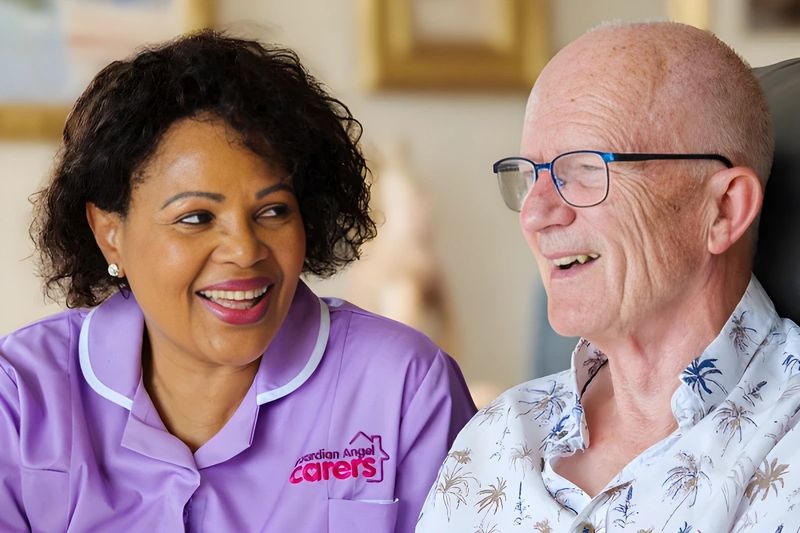
More UK families are choosing home care over residential care for its flexibility, independence, and emotional benefits
— As the UK’s population ages and demand for care evolves, more families are having to make complex decisions about how best to support the needs of older loved ones and relatives with long-term medical conditions. In a growing proportion of cases, home care is a preferred solution in favour of traditional residential care.
This shift reflects changes in societal attitudes towards care in later life, as well as the availability of home-based care and the level of independence more adults are maintaining well into older ages. However, it’s also down to a better understanding of the emotional impacts that transitions can have on loved ones who may need to consider leaving their homes to move into a care facility.
Guardian Angel Carers, the leading and long-established home care provider that offers dignified, person-centred home care, is one of the organisations at the forefront of this change, having seen significant increases in enquiries across each of the company’s 17 UK-wide franchises.

The Surges in Demand for Professional Care at Home
Part of the reason that home care has grown significantly over the past few years is that the demographics in many cities and communities have also changed. ONS research indicates that in the next 50 years, the number of adults in the UK aged over 65 will increase by 8.6 million, and that a quarter of the population will be over 65 by 2043.
In the more immediate future, there will be an estimated 15.5 million people within that same age group within the next 4 years, with rises in average life expectancy and declines in birth rates, coupled with predicted increases in the 850,000 people currently living with dementia, which is expected to rise ‘significantly’.
While living longer is positive news, the caveat is that this doesn’t necessarily mean living in full health. A proportion of older adults may live for longer with conditions such as frailty, mobility limitations, diabetes and arthritis, meaning they may not require around-the-clock medical care, or nursing support in a residential setting, but do need some level of at-home assistance.
Home care has become a viable solution for many, bridging the gap between living at home and struggling with daily tasks, personal care or chores, and being dependent on carers and nurses within a full-time residential home.
Independence is a key theme because care at home ensures that individuals aren’t expected to give up a sense of comfort, routine, and familiarity, and that they can keep control over their daily lives.
Implications of Relocating to Residential Care in Later Life
In some scenarios, moving into a care home is necessary. For families with loved ones with significant health challenges or progressive conditions, it may be important to ensure relatives are supported throughout this transition and are receiving the best possible care.
However, where 24/7 clinical support and professional care aren’t required, these decisions are less straightforward. Many care facility residents report feelings of emotional upheaval, with stress, uncertainty and frustration at a loss of independence, which can, at its most profound, replicate the symptoms of grief.
Adjusting to a new environment, people, and routines can be difficult for anybody of any age, but becomes more so for older adults, who may have long-established schedules, social groups, activities, family, and friends that form the baseline for their hobbies and interactions.
Home care, of course, does not involve the same level of disruption, enabling families to organise support in a familiar home without requiring any changes to routines or community groups.
In fact, many carers support individuals in travelling to clubs, meeting with friends, attending doctors’ appointments, and shopping, ensuring they can live as they wish with the practical and companionship support they need.
Familiarity has also been shown to be central to the well-being of older adults at risk of loneliness and isolation, and with cognitive conditions, further supporting the appeal of home care, where individuals are less likely to feel anxious or distressed.
Advances in Modern Care Planning and the Impacts on Home Care
An often overlooked factor behind the growth of the home care sector is how care planning is managed, the process by which care professionals and organisations record the needs, preferences, medical well-being, and lifestyle of a care recipient and shape the care they deliver around these.
Once regarded as static documents, care plans are now largely digital, dynamic, and responsive, with regular reviews and updates as circumstances or wishes change.
This facilitates a more tailored care service that can be difficult to replicate in a multi-person residential environment, where professionals provide care in group settings and to several individuals at once, rather than on a one-to-one basis.
Accessible home care plans are supported by contemporary technology, with solutions such as remote monitoring, interactive care planning between health professionals and family members, and in-home sensors that detect changes in activities or routines that may prompt an emergency care visit or a well-being check.
Considerations Around the Costs of Home-Based and Residential Care
Home care is adaptable, from visiting care once or twice a week to full-time care, allowing providers to scale their assistance up or down as needed, ensuring that families have the right depth of support without unnecessary costs or interventions.
Perceptions about the costs of care, and how residential and at-home support compare, have therefore changed.
Long-term residential care entails a significant financial commitment, without any opportunity to reduce care that isn’t required or to adjust the amount of daily support an individual receives, which means that families that self-fund care are more likely to choose home-based care services to ensure they have better flexibility.
In contrast, individuals eligible for funded care support may be offered a choice between a full-time residential care space and at-home services, and the right decisions will always depend on the needs, wishes and right to autonomy of the prospective care recipient.
However, it’s important to highlight that the value of care isn’t solely financial, regardless of how that care is provided. For many, the ability to remain at home, protect their independence and continue living a high quality of life is as relevant and meaningful as any budget.
About the company: Guardian Angel Carers is a leading home care provider dedicated to delivering compassionate, personalised care services. With a strong focus on independence, dignity, and quality of life, the company supports individuals in the comfort of their own homes, offering a range of services from companionship to complex care needs.
Contact Info:
Name: Vikki Craig-Vickers
Email: Send Email
Organization: Guardian Angel Carers
Website: https://www.gacarers.co.uk/
Release ID: 89192610
If you detect any issues, problems, or errors in this press release content, kindly contact error@releasecontact.com to notify us (it is important to note that this email is the authorized channel for such matters, sending multiple emails to multiple addresses does not necessarily help expedite your request). We will respond and rectify the situation in the next 8 hours.
